The 30-Minute Dinner Formula
A 30-minute dinner is mostly a sequencing problem, not a cooking problem. The formula: one protein that cooks fast, one vegetable that roasts or sears alongside it, and one sauce you can stir together in two minutes. Put those three in the right order and the clock takes care of itself.
The formula in one line
Fast protein, plus a vegetable cooking in parallel, plus a two-minute sauce. The word doing the work is "parallel." The vegetable never waits for the protein, and the sauce never occupies a burner — it gets made in the dead time while the protein rests. Nothing in the sequence stands idle, which is the entire difference between thirty minutes and fifty.
Slot one: a protein that cooks fast
- Fish fillets. Salmon and cod bake at high heat in about the time it takes to set the table, and they are done when they flake.
- Shrimp. Minutes in a hot pan. Buy them frozen and peeled, and thaw under cold water while the oven heats.
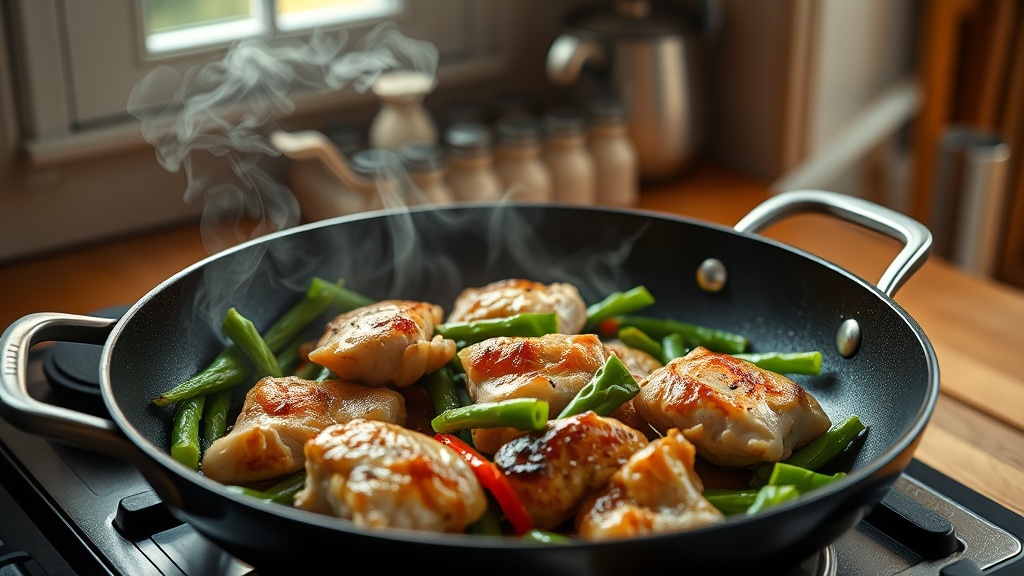
- Boneless chicken thighs. More forgiving than breasts — sear them hard on one side and let the second side coast.
- Extra-firm tofu. Pressed, torn, tossed in cornstarch, into a hot pan.
- Eggs. A frittata takes ten minutes; fried eggs over rice and vegetables take three.
- Ground meat or crumbled tempeh. Browns quickly and turns the same formula into tacos or a rice bowl.
Slot two: a vegetable that cooks alongside
The oven is the burner you never have to stand at. Set it to 425°F and a sheet pan handles almost everything:
- Green beans, broccoli, and cauliflower — oil, salt, single layer, with enough space that they roast instead of steam.
- Asparagus and zucchini — faster; put them in later.
- Cherry tomatoes and peppers — they collapse into something close to a sauce of their own.
Cut everything roughly the same size and the pieces finish together, which matters more than any timing chart.
The tightest version puts both slots on one tray. Our lemon-herb baked salmon with green beans is this formula on a single sheet pan — the beans roast in the same oil and lemon as the fish. You will find more built like it in our recipes under the quick tag.
Slot three: the two-minute sauce
The sauce is what turns components into dinner, and every one of these is measured in seconds:
- Lemon, olive oil, and whatever soft herb is in the fridge.
- Plain yogurt, grated garlic, lemon, salt.
- Tahini whisked with lemon and water until it pours.
- Soy sauce, rice vinegar, a little honey, toasted sesame.
- The pan sauce: pan off the heat, a knob of butter, a squeeze of lemon, a splash of water, scrape up the browned bits.
Make the sauce during the protein's rest, not before you start. It is the one job that fits exactly into that gap.
The order: oven first, pan second, sauce while it rests
Here is the whole clock:
- 0:00 — Oven on to 425°F. Prep the vegetable while it heats.
- 0:08 — Vegetable in.
- 0:12 — Protein starts: onto the tray beside the vegetable, or into a pan on the stove.
- 0:25 — Protein out, resting on the board.
- 0:26 — Sauce, in the empty two minutes.
- 0:30 — Plate.
The one rule underneath all of it: start the slowest thing first. If the vegetable takes longer than the protein, it goes in earlier. If you are searing rather than baking, the oven still goes on first, because preheating is the slowest step in the kitchen. And the rest at the end is not a nicety — it is the window the sauce lives in, and fish and meat slice cleaner for it.
Turning one dinner into a week
Change one slot per night and the formula never repeats: salmon becomes thighs, green beans become broccoli, lemon-herb becomes tahini. The same three slots also bend to most ways of eating — the salmon and green beans version fits keto as written, and the tofu version is fully plant-based. If you would rather have the week arranged for you, our weekly plans sequence seven dinners with one grocery list, and the free plans show the format before you buy anything.