Slow cooker basicsthe cuts, the liquid, and the timing
A slow cooker rewards one kind of ingredient and quietly ruins another, and knowing which is which is most of the skill. This guide covers the four decisions that matter — the cuts, the liquid, the heat setting, and the timing of fragile additions — plus the safety basics that every manual mentions and almost nobody reads.
The cuts that transform
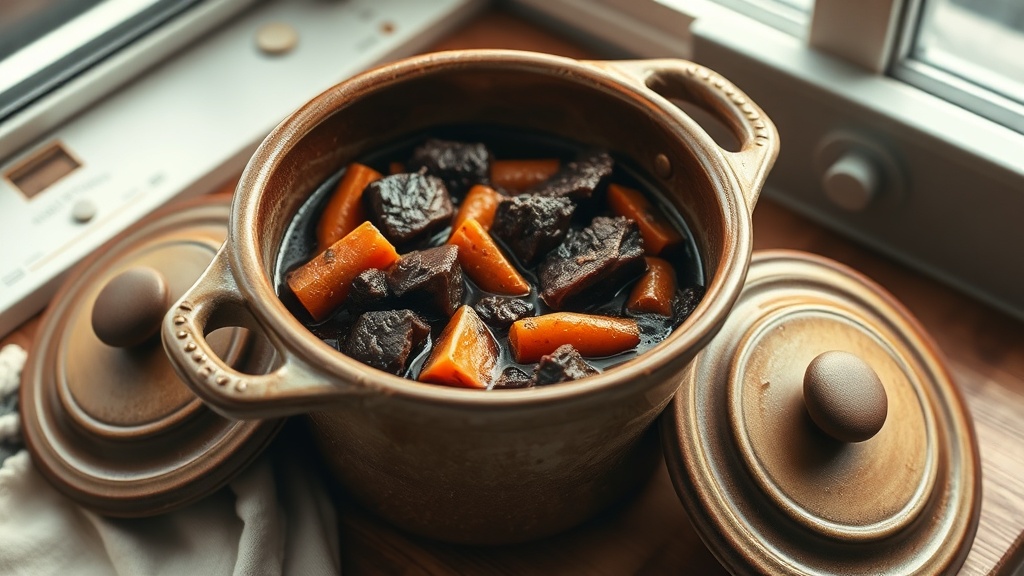
The slow cooker's one real talent is turning tough, hard-working cuts tender. Those cuts are full of connective tissue, and hours of gentle, moist heat dissolve that tissue into the silky, spoon-tender texture braising is known for. Lean, quick-cooking cuts have nothing to dissolve, so the same hours just wring them dry.
Buy these:
- Pork shoulder (sold as Boston butt or picnic) — the most forgiving cut in the store, and usually one of the cheapest.
- Chicken thighs — bone-in for the most flavor, boneless for convenience. Remove the skin either way; without dry heat it turns flabby rather than crisp.
- Beef chuck — the classic pot roast and stew cut.
- Brisket — needs the full cooking time, and rewards it.
- Lamb shoulder, lamb shanks, and beef short ribs — the same principle, richer results.
Skip these, or add them near the end: chicken breast, pork loin, pork tenderloin, and most fish. They finish in minutes on the stove and have nothing to gain from hours in the pot.
Liquid: less than you think
A slow cooker loses almost nothing to evaporation. The lid traps steam, the steam condenses and drips back in, and everything the meat and vegetables release stays in the pot. Recipes written for the stovetop assume steady evaporation, so followed unchanged they come out thin and diluted.
- For a braise — one big cut like a shoulder or brisket — a cup of liquid is usually plenty. It looks wrong at the start and right at the end.
- When adapting a stovetop stew or soup, cut the liquid by a third to a half.
- Onions, mushrooms, tomatoes, and zucchini release a surprising amount of water. Count them as liquid.
- If a finished dish is still too thin, take the lid off and run the cooker on high for thirty minutes, or reduce the liquid in a pan on the stove. That last step also concentrates the flavor most slow-cooker dishes want at the finish.
High and low
The two settings reach roughly the same finishing temperature; the difference is how quickly they climb there. That makes the choice simpler than it looks.
- Low suits the transforming cuts. The slow climb gives connective tissue the long window it needs, and the timing is forgiving — an extra hour rarely hurts a shoulder on low.
- High suits soups, vegetables, and days when the schedule forces your hand.
- The common conversion holds up in practice: one hour on high equals roughly two to two and a half on low.
- Whichever you choose, resist lifting the lid. Every peek drops the temperature and adds real time to the cook.
Dairy and greens go in last
Long, moist heat is exactly what delicate ingredients cannot take. The pattern is simple: sturdy things at the start, fragile things at the end.
- Dairy — milk, cream, yogurt, sour cream, most cheeses — splits and curdles over hours. Stir it in during the last fifteen to thirty minutes, or off the heat entirely.
- Tender greens — spinach, chard, stemmed kale — need only minutes. Fold them in just before serving and let the residual heat wilt them.
- Fresh herbs, lemon juice, and frozen peas belong in the final minutes too. Anything added for brightness fades if it cooks for hours.
- Hardy vegetables — onions, carrots, celery, potatoes — go in at the start, placed under the meat where the heat is steadiest.
Safety basics
None of this is complicated. The appliance's gentleness is its one weak point: it heats slowly, so the basics are mostly about not letting food linger lukewarm.
- Thaw meat fully before it goes in. Standard USDA guidance is consistent here: a slow cooker takes too long to bring frozen meat up to a safe temperature.
- Fill the pot between half and two-thirds full. Underfilled cooks too fast; overfilled heats too slowly.
- Dried kidney beans need a hard ten-minute boil on the stove before any slow cooking — the pot never gets hot enough to make them safe on its own. Canned beans skip the problem entirely.
- Refrigerate leftovers within two hours, and reheat them on the stove or in the microwave rather than in the slow cooker. The warm setting is for holding hot food, not for bringing cold food back up.
Once the pattern is familiar — tough cut, modest liquid, low and slow, fragile things last — the slow cooker becomes a scheduling tool as much as a cooking one. The slow-cooker tag in our recipes collects dishes built on exactly these rules, several of the weekly plans use one slow-cooker batch as the anchor for two or three dinners, and the free plans are a low-stakes place to try the method for a week.