The one-pan dinner method
The one-pan dinner is less a recipe category than a method: put things that finish at the same time in the same hot pan, and stagger the ones that don't. This guide covers the two pans, the matching logic, the staggering moves, the parchment question, and — in exactly one paragraph — how to keep the pan itself in shape.
Sheet pan or skillet
The two pans do genuinely different jobs, and picking the right one settles half the recipe before you start.
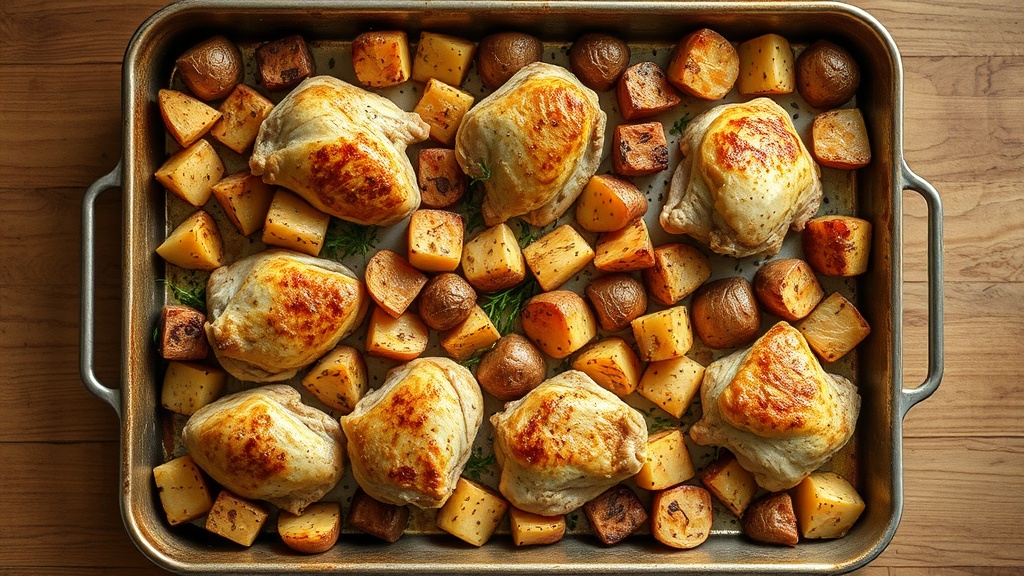
A sheet pan works by dry oven heat. It is hands-off, it browns everything at once, and it scales — four portions fit as easily as two. Its limit is sauce: moisture the food releases either evaporates or puddles, and there is no good way to build a sauce on a flat tray.
A skillet works by contact. It is faster, it gives you minute-to-minute control, and the browned bits left on the metal become a pan sauce with a splash of liquid. Its limit is space: past two or three portions the food crowds, steams, and stops browning.
A workable rule: if you want a sauce, take the skillet. If you want volume and a free half hour, take the sheet pan — most of the weekly plans lean on at least one sheet-pan night for exactly that reason.
What cooks at the same rate
Matching cook times is the core skill, and it is easier to hold as three groups than as a table of numbers. At a typical roasting temperature — around 425°F — ingredients sort into broad speeds.
- Fast, done in about 10 to 15 minutes: shrimp, thin fish fillets, asparagus, green beans, snap peas, cherry tomatoes, thin-sliced zucchini.
- Medium, 20 to 30 minutes: chicken thighs, sausages, broccoli and cauliflower florets, Brussels sprouts, peppers, red onion wedges.
- Slow, 35 minutes and up: potatoes in large chunks, winter squash, whole carrots, bone-in chicken pieces.
Cut size is the equalizer. A carrot is slow whole and medium in thin coins; potatoes move up a group when cubed small. Most of the matching happens with the knife, before the oven is even on. The one-pan tag in our recipes collects dishes where this grouping is already done for you.
Staggered additions
When the groups will not line up, don't average the times — stagger the additions.
- On a sheet pan, start the slow group alone, then slide the pan out and add the medium group, then the fast group for the final minutes. Potatoes first for fifteen minutes, chicken thighs joining them, green beans for the last ten is the classic shape.
- In a skillet, staggering runs both directions: sear the protein first, set it aside, cook the vegetables in the same fat, then return the protein to finish. Taking something out early is as legitimate as putting it in late.
- It is still one pan. Staggering costs nothing but a timer, and it is the difference between a tray where everything is done and a tray where one thing is.
The parchment question
Parchment divides sheet-pan cooks, and both camps are right about different dinners.
Lined, the pan releases everything cleanly — sticky glazes, delicate fish, any marinade with honey or sugar in it — and cleanup is a single gesture. The cost is browning: parchment is a thin insulator, and food on it loses the direct metal contact that produces the deepest color.
Unlined, with a film of oil on the bare metal, you get the best browning the pan can give. Go bare when crisp edges are the point — potatoes, Brussels sprouts, chicken thighs you want burnished rather than merely cooked.
Two practical notes. Keep parchment below the temperature printed on its box, usually around 425 to 450°F. And be careful with foil under acidic ingredients like tomato or lemon, which can react with it and pick up a faintly metallic taste.
Pan maintenance, in one paragraph
A sheet pan that has gone brown and mottled is seasoned, not ruined — darker metal takes on heat a little faster, so check dinners a few minutes early and carry on. Soak baked-on patches in hot soapy water rather than scouring the surface raw, and skip the dishwasher, which dulls aluminum without getting it any cleaner. A cast-iron skillet asks only that you dry it right away and wipe it with a thin film of oil while it is still warm; a stainless skillet asks only for a soak before scrubbing. No pan here needs replacing because it looks used — for this method, used-looking is the working state.