Cooking MilderThe Gentle Kitchen Method
Some weeks you want the volume turned down: food that is warm, mild, and soft-edged rather than loud. This guide describes a way of cooking we call the gentle kitchen — quieter aromatics, herbs instead of heat, low wet methods, soft textures done well. It is a cooking style, not a medical protocol, and it makes no claims beyond the plate; the terms we use for it are defined in the glossary.
What the gentle kitchen is — and what it is not
Gentle cooking is a flavor and texture register, the same way "smoky" or "bright" is. Plenty of the world's everyday cooking already lives here: congee, brothy noodle bowls, poached chicken with rice, oatmeal, a pot of beans cooked until creamy. Mild is not a compromise position; it is a cuisine choice, and whole food cultures make it beautifully.
Two honest boundaries. First, this is not a treatment plan or advice about any condition; it describes how food is cooked, nothing more. If you cook within medical guidance, follow your clinician. Second, gentle does not mean bland. The craft of this style is building interest without sharpness, which is a real skill and the point of everything below.
Scallion tops instead of onion bulbs
The fastest way to soften a dish's opening move is at the aromatics.
- Use the green tops of scallions instead of chopped onion. They carry the allium flavor without the sharp bite, and they go in near the end of cooking rather than the start. Chives do the same job raw, scattered over the finished dish.
- For garlic flavor without garlic pieces, warm sliced garlic gently in oil, then strain it out and cook with the oil. The flavor stays; the hard edges and the solids do not. Cooks use this trick for finesse as much as for mildness.
- Leek greens, fennel, and celery are quiet aromatics that build a base without announcing themselves.
None of this is subtraction for its own sake. A soup started on strained garlic oil and finished with scallion greens tastes composed, not restricted.
Herbs over chili
Heat is one way to make food interesting. It is not the only one, and the gentle kitchen simply reaches for the others first.
- Soft herbs at the end: dill, parsley, basil, cilantro, tarragon. Added off the heat, they do the brightening work a spoonful of chili sauce usually does.
- Warm spices in small amounts: a little ginger, turmeric, or cinnamon in the right dish gives warmth without burn.
- Umami for depth: a parmesan rind in the soup pot, a few dried mushrooms, a small spoonful of white miso stirred in at the end.
- Lemon zest where you might have reached for lemon juice — the perfume without the pucker.
Chili is not banned here. It is just no longer the lead instrument, and most dishes turn out to have plenty to say without it.
Poaching and simmering
The gentle kitchen prefers water to flame: low, wet methods that cook food through without hard edges.
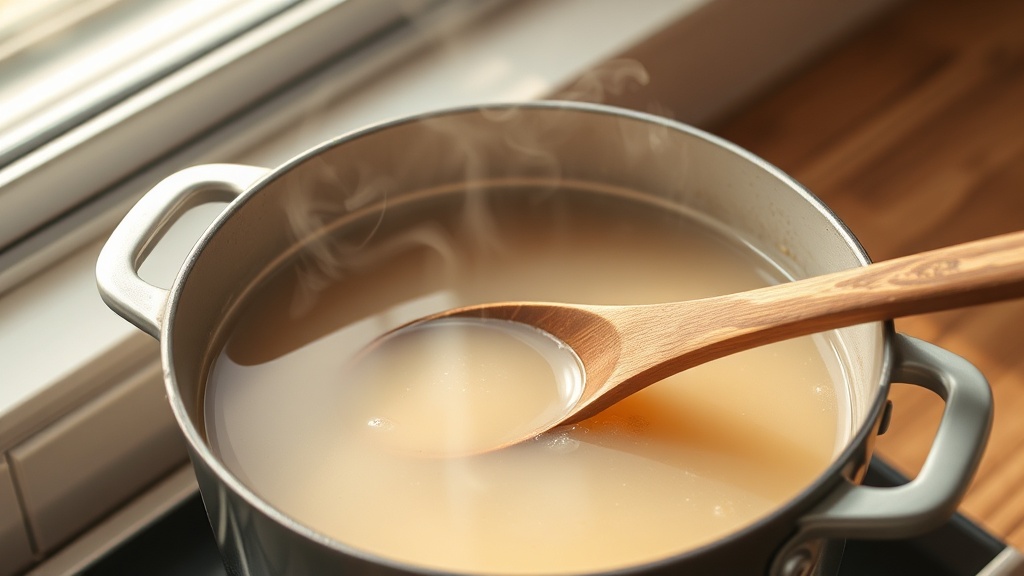
- Poaching: chicken breast or white fish lowered into barely-bubbling liquid — water, broth, or milk — and cooked at a shiver, never a boil. The result is tender, mild, and very hard to ruin.
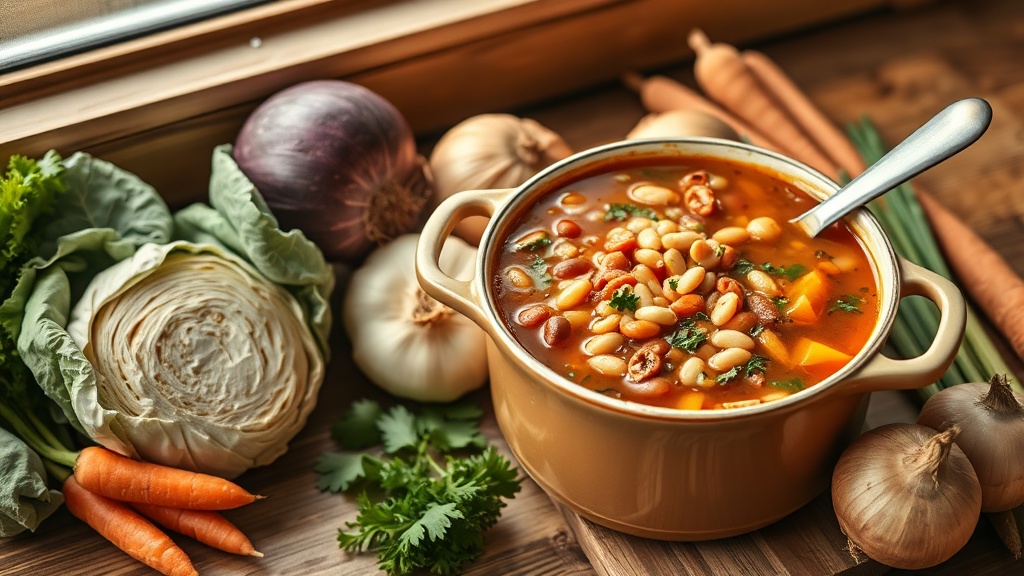
- Simmering: soups, brothy grains, beans cooked slowly until creamy. Long and low is the whole technique.
- Steaming: vegetables and fish kept soft and clean-tasting, then finished with good olive oil and herbs.
- The slow cooker and the covered low oven belong here too — braises where everything relaxes into the liquid over a quiet afternoon.
These methods are forgiving by design. Nothing sears, nothing scorches, and dinner can wait ten minutes without penalty.
Soft textures, done well
Soft cooking has a reputation problem it does not deserve, mostly earned by institutional kitchens. Done with intention, it is some of the most satisfying food there is to eat.
- Cook grains a little past al dente on purpose: risotto, congee, oatmeal, polenta stirred until it flows.
- Mash and puree with confidence — potatoes, white beans, cauliflower — and season them properly, with enough salt and good fat.
- Cook vegetables until genuinely tender, not gray: slow-roasted carrots, melting zucchini, braised greens.
- Peel when you want less chew, choose ripe fruit, and let bread go soft in the bowl, as bread has done in soup for centuries.
- Keep one gentle contrast per dish — a spoonful of yogurt on warm lentils, soft herbs on congee — so soft never slides into monotonous.
Where this lives on the site
Recipes cooked in this register carry the gut-gentle tag, a label for a cooking style whose exact meaning is set out in the glossary. You can browse them alongside everything else in the recipes index, and if you like organizing a week around a single register, our ways of eating pages describe each pattern in the same plain, no-promises terms used here.