What KeepsFridge and Freezer Times for Cooked Food
Most questions about leftovers come down to two numbers: how long in the fridge, and how long in the freezer. This guide puts the standard USDA storage times for cooked food in one place, then covers the handling around them — cooling, containers, labeling, and reheating — so a Sunday afternoon of cooking still tastes good on Thursday.
The storage times
Two reference points first. These figures assume a fridge at or below 40°F and a freezer at 0°F, which is what the dials on most home appliances aim for. And the two columns mean different things: fridge times are the window for eating the food, while freezer times are about quality. Food kept constantly frozen at 0°F keeps indefinitely — the months listed are simply how long texture and flavor hold up well, which is why a stew found at the back of the freezer after four months is still worth thawing.
The USDA windows for the dishes home cooks actually batch:
- Cooked meat and poultry: 3 to 4 days in the fridge; 2 to 6 months in the freezer.
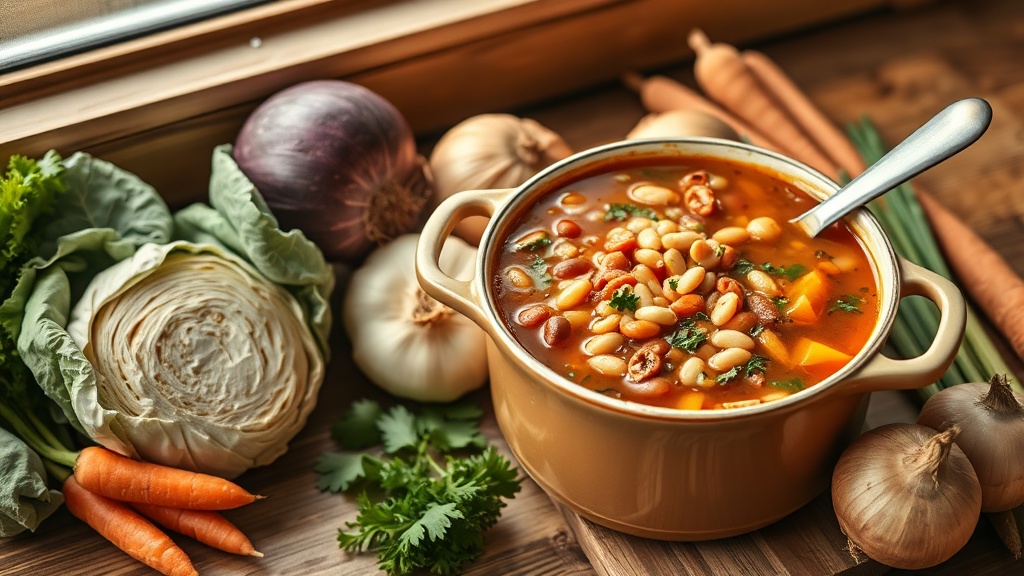
- Soups and stews: 3 to 4 days in the fridge; 2 to 3 months in the freezer.
- Casseroles and mixed cooked dishes: 3 to 4 days in the fridge; 2 to 3 months in the freezer.
- Cooked fish: 3 to 4 days in the fridge.
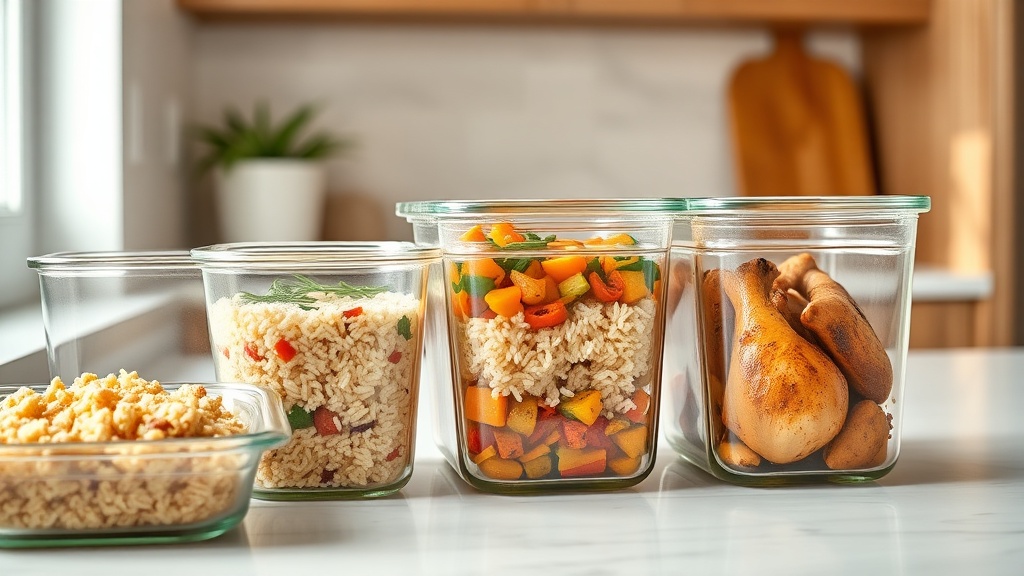
- Cooked rice and grains: 3 to 4 days in the fridge; they freeze well in flat, portioned bags.
- Egg dishes such as frittata and quiche: 3 to 4 days in the fridge.
- Gravy and meat broth: 1 to 2 days in the fridge; 2 to 3 months in the freezer. This is the outlier — a shorter window than the dishes the broth goes into, and worth remembering if you make stock.
- Pizza: 3 to 4 days in the fridge.
- Opened deli meat: 3 to 5 days.
When a dish spans categories — chicken soup, a rice bake — use the shortest window among its parts. In practice, three to four days covers nearly everything, and that consistency is what makes the fridge-versus-freezer decision at the end of this guide so simple.
Cooling: the two-hour window
USDA guidance is to get cooked food into the fridge within two hours of cooking — within one hour if it is sitting somewhere above 90°F, like a backyard table in July. Waiting for food to cool to room temperature first is an old habit the guidance does not ask for. A home fridge handles warm food fine, provided you help it cool quickly.
Helping it means going shallow. A tall stockpot of soup holds its heat for hours; the same soup divided into containers two inches deep or less cools in a fraction of the time. For a very large batch, set the pot in a sink of cold water and stir for a few minutes before portioning. Cut large roasts into smaller pieces rather than refrigerating them whole. Lids can go on loosely at first and be sealed once the food is cold.
Containers that earn their space
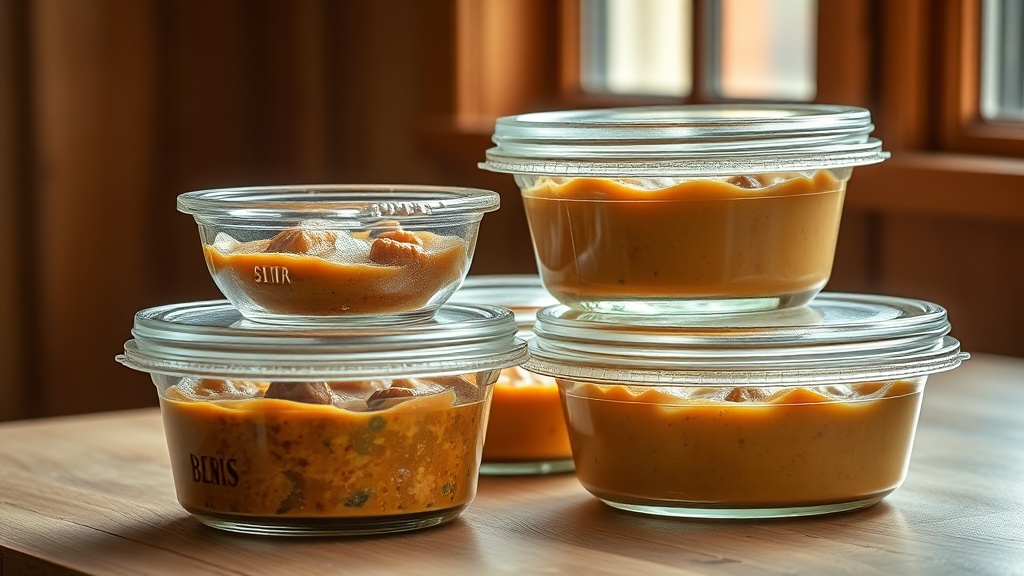
For the fridge, the useful qualities are airtight, shallow, and clear — airtight so the food neither dries out nor picks up neighboring smells, shallow for fast cooling, clear so Thursday-you can see what exists without opening anything.
The freezer asks for two more habits. Leave about an inch of headspace in rigid containers holding soup or stew, because liquids expand as they freeze. And for anything pourable, freezer bags frozen flat are hard to beat: they stack like books, thaw quickly, and turn a deep freezer drawer into something you can actually read. Press the air out before sealing — freezer burn, the pale dry patches on a poorly wrapped surface, is what air contact does to frozen food. It is a quality problem rather than a safety one, and a burned patch can simply be cut away, but tight wrapping avoids it altogether.
Label like a stranger will read it
A roll of masking tape and a marker outperform memory every time. Write what it is and the date it was cooked — "beef stew 3/14" takes five seconds and settles every future debate. Unlabeled containers migrate to the back, wait politely past their window, and get thrown out whole.
Two small systems help. Keep one shelf, or one corner of a shelf, as the eat-first zone, and move anything on day three there. In the freezer, put new batches behind old ones, so the oldest is what your hand finds first.
Reheating, fully
Reheat leftovers until steaming hot all the way through — 165°F at the center, if you use a thermometer — and bring soups, sauces, and gravies to a rolling boil. Reheat the portion you are eating rather than the whole container; the rest stays cold and keeps its window.
Thawing has three good routes: overnight in the fridge, in cold water in a sealed bag with the water changed every half hour, or in the microwave and straight into cooking. The counter is not one of them. Food thawed in the fridge can be refrozen if plans change; food thawed by water or microwave should be cooked first.
None of this needs to feel like homework. If your weeks run on batch cooking, our weekly plans are built around exactly these windows, most of the recipes tagged for batching freeze cleanly, and the free plans are an easy way to test the rhythm for a week before committing to it.